EMITTING SQUARE Launches DELO Software to Automate Intellectual R&D for Next-Generation OLEDs - EMITTING SQUARE
AI-driven software integrating device physics, simulation, and automated research workflows to accelerate next-generation OLED innovation. The platform enables researchers to automate complex analysis and transform experimental and simulation data into actionable scientific insights.
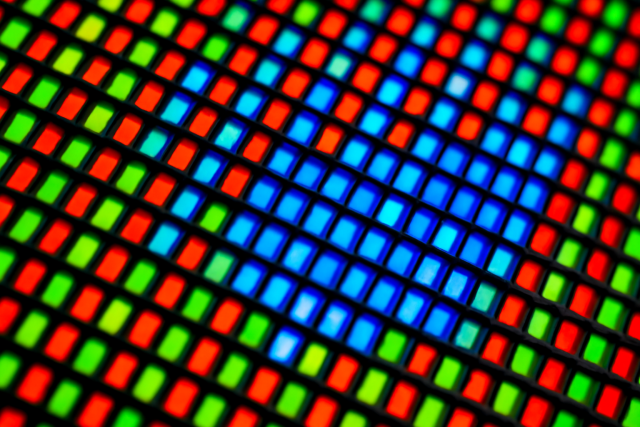
The development of modern OLED devices is reaching a new level of complexity. Multilayer device architectures, advanced emissive materials, and intricate exciton dynamics are pushing the limits of traditional research workflows. Researchers must analyze charge transport, exciton formation, recombination dynamics, and degradation mechanisms simultaneously, often across fragmented tools and manual analysis pipelines.
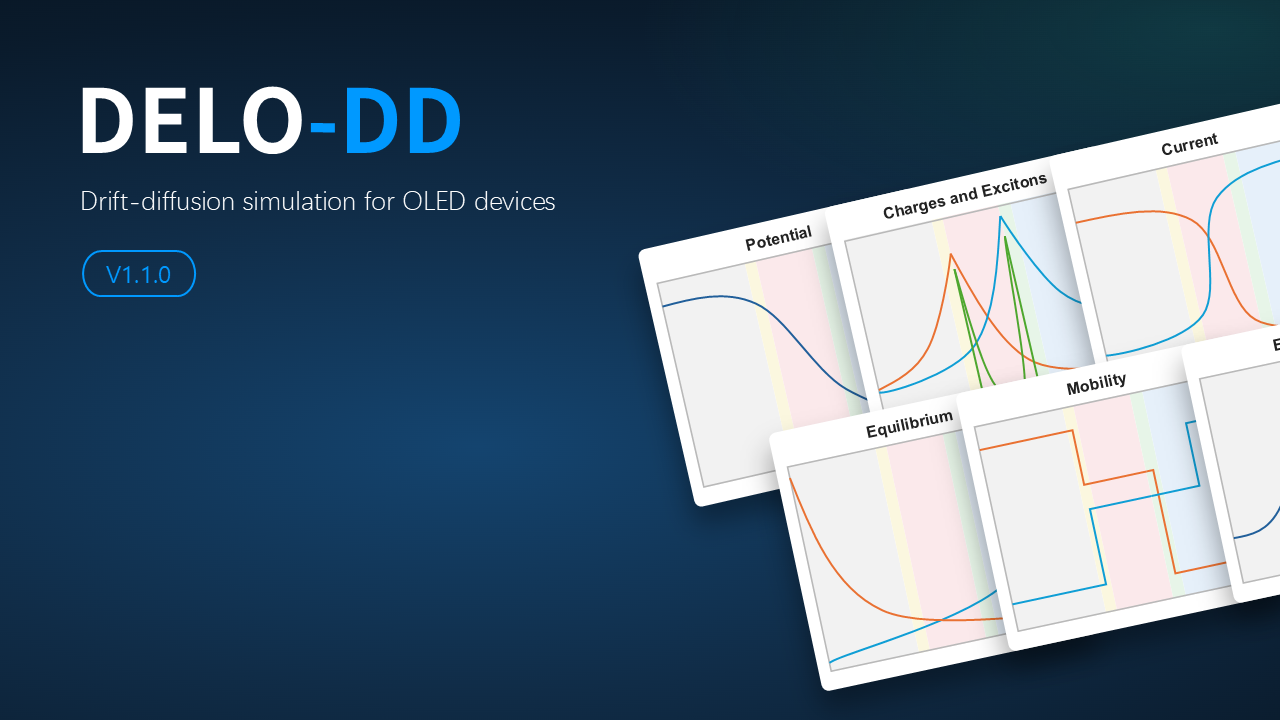
Today we introduce DELO, a research platform designed to simplify and accelerate OLED device analysis.
DELO integrates physics-based simulation, automated parameter extraction, and advanced data analysis into a unified research environment. By bringing these capabilities together, DELO enables researchers to transform complex experimental and simulation data into actionable scientific insight.
Core Research Capabilities
- Physics-Based Device Simulation
DELO incorporates advanced OLED device physics models to simulate charge transport, exciton generation, recombination processes, and optical emission dynamics within complex multilayer architectures.. - Automated Parameter Extraction:
The platform automatically aligns simulation outputs with experimental measurements, enabling rapid extraction of physically meaningful parameters without time-consuming manual fitting. - Data-Driven Research Workflows:
Large-scale experimental and simulation datasets are systematically analyzed to identify correlations and trends, supporting deeper understanding of device behavior and guiding hypothesis development and device optimization.
Advanced Scientific Analysis
DELO transforms fragmented research data into structured scientific knowledge. By integrating device simulations and experimental datasets, the platform analyzes complex OLED characteristics including electrical behavior, exciton dynamics, and degradation mechanisms.
This enables researchers to gain deeper insight into device performance and failure processes.
Accelerating OLED Innovation
By streamlining simulation workflows and advanced data analysis, DELO significantly reduces the time required to interpret experimental and simulation results. Researchers can rapidly explore device architectures, evaluate material systems, and identify performance limiting mechanisms.
This shifts OLED research away from slow trial-and-error experimentation toward a more predictive research paradigm, where device behavior can be understood and optimized through integrated simulation and data-driven analysis.
Toward Autonomous OLED Research
DELO represents a step toward more integrated research environments in OLED science. By combining physics-based simulation with advanced analytical frameworks, the platform helps researchers uncover key device mechanisms and explore design spaces that would otherwise be difficult to investigate through conventional experimentation alone.